Difficulty conceiving can result from ovulation, egg supply, age-related changes, blocked tubes, uterine conditions, endometriosis, cervical factors, sperm, or more than one cause at the same time. You will learn what happens at the first visit, which tests investigate each possibility, how cycle timing affects results, and when evaluation should begin for both partners.
Key takeaways
- Begin evaluation after 12 months under 35, or six months at 35 and older.
- Arrange an appointment promptly if you are over 40.
- Semen analysis checks sperm count, movement, shape, and semen volume.
- Clinicians combine both partners’ results before recommending treatment.
When should evaluation begin, and what happens at the first visit?
Start an infertility evaluation after 12 months of regular, unprotected intercourse if you are younger than 35, or after 6 months if you are 35 or older. Arrange an appointment without delay if you are over 40.
Seek earlier assessment for irregular or absent periods, suspected endometriosis or tubal disease, prior pelvic infection, chemotherapy, recurrent pregnancy loss, or known male-factor risks.
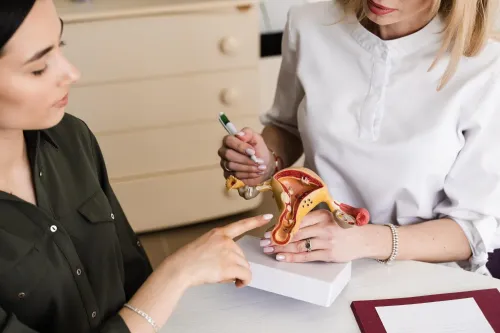
At the first visit, the clinician looks for clues before ordering tests. The discussion usually follows this sequence:
- Review your reproductive history: menstrual pattern, duration of trying to conceive, prior contraception, previous pregnancies and pregnancy losses, including recurrent pregnancy loss.
- Identify factors that affect conception: intercourse frequency and timing, pelvic or abdominal surgery, prior pelvic infection, other infections, medications, sexual function, tobacco, cannabis, alcohol, occupational exposures, and relevant family history.
- Begin both partners’ infertility evaluation together. Each person gives a reproductive and medical history, and the male partner provides at least one semen analysis rather than leaving initial testing to the woman.
This approach prevents a missed clue from delaying care. For example, absent periods point toward an ovulation problem, while prior infection or surgery raises concern about tubal damage.
A semen analysis belongs at the start because male factors can contribute wholly or partly to infertility, and an abnormal result usually needs confirmation rather than an immediate diagnosis.
How are ovulation, ovarian reserve, and age-related fertility decline assessed?
Predictable periods every 21–35 days usually suggest that ovulation is occurring. Irregular, infrequent, or absent periods require ovulation assessment for polycystic ovary syndrome, thyroid disease, high prolactin, hypothalamic suppression, or reduced ovarian function.
1. A mid-luteal progesterone blood test confirms recent ovulation when timed about one week before the expected next period. It is not automatically a day-21 test, and one fluctuating result cannot measure luteal-phase quality.
2. Antral follicle count uses transvaginal ultrasound to count small follicles in both ovaries. It, anti-Müllerian hormone AMH, and early-follicular-phase follicle-stimulating hormone and estradiol estimate ovarian reserve and the likely response to ovarian stimulation.
3. Regular bleeding does not prove that ovarian reserve is normal. Reserve tests also do not measure egg quality or guarantee natural conception; they mainly help plan treatment and interpret the likely number of recruitable follicles.
Age remains the stronger predictor of reproductive potential because egg number and quality decline over time, with the decline becoming more consequential as age increases. A 39-year-old with regular cycles and reassuring reserve tests still faces different prospects from a 29-year-old with the same results.
Age, duration of trying, symptoms, and urgency determine how quickly testing and treatment should proceed.
What does semen analysis reveal about male-factor infertility?
At least one semen analysis belongs at the beginning of infertility evaluation because male-factor infertility contributes wholly or partly to many couples’ difficulty conceiving. The test measures semen volume, sperm concentration, total count, sperm motility, and morphology, guiding further testing without placing the initial burden on the woman.
- Semen volume shows how much fluid was produced.
- Sperm concentration reports sperm per millilitre.
- Total count estimates the number in the entire sample.
- Motility records how many sperm move and how effectively.
- Morphology assesses sperm shape and structure.
- Round cells or signs of infection require interpretation alongside symptoms and other findings.
Collect the sample by masturbation into the laboratory’s container after its specified abstinence interval, commonly 2–7 days. Report incomplete collection, fever, recent illness, or difficulty producing the sample because each can affect interpretation.
Sperm parameters fluctuate, so an abnormal result usually leads to a repeat semen analysis about one month or more later, not an immediate diagnosis of sterility. A normal result also does not exclude every male-factor problem. Targeted follow-up considers medications, anabolic steroids, tobacco, cannabis, alcohol, heat, occupational exposures, sexual function, and relevant medical history.
How do clinicians check the tubes, uterus, endometriosis, and cervical factors?
A pelvic ultrasound infertility assessment is usually the starting point for structural causes, but a normal scan does not exclude every problem. Clinicians match each test to the suspected cause:
1. Transvaginal ultrasound examines ovarian anatomy, fibroids, adenomyosis, endometrial features, and some endometriomas. It cannot reliably detect superficial endometriosis or all tubal disease.
2. Hysterosalpingography (HSG) uses contrast dye and X-rays to show whether the fallopian tubes fill and spill, while outlining the uterine cavity. Schedule it after menstruation ends and before ovulation, after pregnancy has been excluded.
Dye can appear blocked near the uterine end of a tube even when it is open, so unexpected findings may need confirmation.
3. Saline infusion sonography places sterile saline inside the uterus while ultrasound images the expanded cavity. This helps identify polyps and submucosal fibroids that a standard scan can miss.
4. Hysteroscopy views the cavity directly through a slender camera and can remove or treat selected lesions. It is particularly useful for hysteroscopy for polyps and fibroids when imaging suggests a cavity abnormality.
5. Cervical assessment considers prior cervical surgery, cervical stenosis, difficult intercourse, and symptoms that prevent semen from entering the vagina. Painful periods, deep pain during intercourse, previous pelvic infection, or pelvic surgery raise concern for endometriosis, adhesions, or tubal damage.
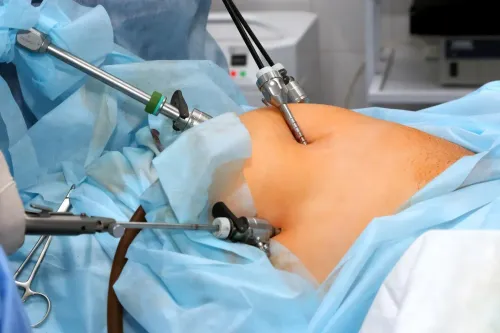
Diagnostic laparoscopy is reserved for selected symptoms or unresolved suspected disease because it requires surgery, carries operative risks, and does not improve fertility for every finding.
How are test results combined into a cause-specific plan?
A single abnormal result rarely names the cause. The specialist weighs ovulation against cycle history, ovarian-reserve tests, age, ultrasound, and symptoms; interprets tube findings alongside endometriosis and surgical history; and reviews semen results with collection details and repeat testing when abnormal, often after one month, because parameters fluctuate.
| Finding | Cross-check | Response |
|---|---|---|
| Irregular ovulation | Cycle pattern, thyroid or prolactin symptoms, reserve, age | Targeted hormone assessment and ovulation treatment |
| Tubal concern | Endometriosis symptoms, infection, pelvic surgery, uterine imaging | Confirm patency and consider selected further evaluation |
| Abnormal semen analysis | Collection conditions, illness, medications, repeat result | Confirm the finding before choosing male-factor treatment |
| Normal core tests | Ovulation, semen, tubes, uterine cavity, age | Consider unexplained infertility and treatment options |
Routine postcoital mucus testing, endometrial biopsy for a presumed luteal-phase defect, immune testing, thrombophilia testing, sperm DNA-fragmentation testing, and karyotyping are not initial tests for everyone. Order them for a specific history or finding when the result could change management.
Thyroid-stimulating hormone TSH testing is targeted to menstrual dysfunction or thyroid symptoms. Prolactin testing is targeted to galactorrhea, oligomenorrhea, or amenorrhea rather than used universally.
If the standard evaluation appears normal, unexplained infertility is a diagnosis of exclusion, not proof that no biological problem exists. Dr Suparna Ganguly can use this framework to explain whether each finding needs action, repeat testing, or broader evaluation before agreeing a cause-specific infertility treatment plan.
Related services
Infertility Treatment ₹700 Dr. Suparna Ganguly offers comprehensive infertility evaluation and treatment for couples seeking expert guidance on their journey to parenthood. View service → |
Family Planning & Contraceptive Family Planning & Contraceptive ₹700 Dr. Suparna Ganguly provides comprehensive Family Planning and Contraceptive Services to help individuals and couples make informed decisions about... View service → |
Frequently asked questions
When should you begin an infertility evaluation?
Begin after 12 months of regular, unprotected intercourse if you are younger than 35, or after six months if you are 35 or older. Arrange an appointment without delay if you are over 40, or sooner with irregular periods, suspected endometriosis, previous pelvic surgery, recurrent miscarriage, or known sperm problems.
How are ovulation and ovarian reserve assessed?
Clinicians review menstrual patterns, use blood tests such as progesterone and anti-Müllerian hormone, and may perform an ultrasound to count antral follicles. These results help assess ovulation and egg supply, but ovarian-reserve tests do not measure egg quality directly.
What does a semen analysis show?
A semen analysis measures semen volume, sperm concentration, total count, progressive motility, and morphology. An abnormal result is usually repeated because illness, abstinence duration, collection problems, and laboratory variation can affect one sample.
How are blocked tubes, uterine problems, and endometriosis checked?
A hysterosalpingogram or HyCoSy checks whether contrast passes through the fallopian tubes and outlines the uterine cavity. Transvaginal ultrasound assesses the uterus and ovaries. Endometriosis evaluation combines symptoms, examination, ultrasound, and sometimes laparoscopy; no single routine test detects every case.
How are fertility test results combined into a treatment plan?
The clinician considers both partners’ histories and results together, then identifies ovulation, sperm, tubal, uterine, endometriosis-related, age-related, or unexplained factors. The plan may involve timed intercourse, ovulation treatment, intrauterine insemination, surgery, or IVF based on the cause, age, duration, and treatment goals.