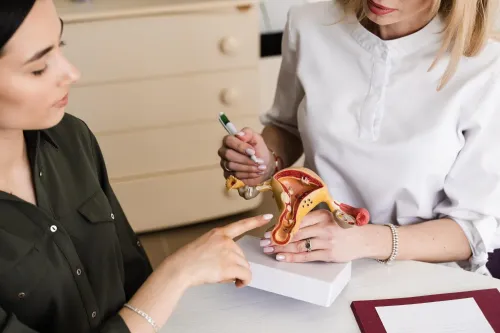
An epidural can reduce contraction pain while you remain awake, but it does not guarantee complete numbness or determine whether your baby is born vaginally or by Caesarean section. By understanding the procedure, timing, monitoring, alternatives, risks and hospital policies, you can make a clearer labour-pain plan and ask the anaesthetist the right questions.
Key takeaways
- An epidural reduces labour pain while keeping you awake and involved in birth.
- Request an epidural early enough for assessment, consent and safe placement.
- Expect blood-pressure, fetal-heart-rate and pain-relief monitoring after each dose.
- Compare epidurals with gas, injections and non-medical comfort measures before labour.
What an epidural does—and what you may still feel
A labour epidural is a thin catheter that delivers medicine into the epidural space in your lower back. This regional anaesthesia reduces pain signals from the uterus, cervix and birth canal while you remain awake and able to take part in labour.
The treatment is called epidural analgesia because it relieves pain rather than making you fully unconscious.
The medicine usually combines a dilute local anaesthetic with a small dose of opioid. It can provide strong, adjustable relief throughout labour, but “painless delivery” is not a precise promise. The aim is to make contractions manageable, not necessarily to remove every sensation.
After the epidural takes effect, you may still notice:
- Pressure as your baby moves down
- Tightening or pulling during a contraction
- Stretching and pressure during pushing
- Touch or movement while an examination or procedure is performed
- Some pain if the block is uneven or incomplete
Your legs may feel warm, heavy or numb, and movement can become less steady. Tell the anaesthesia team if one side remains painful or the relief fades; the catheter may need adjustment or replacement. Temporary soreness at the insertion site is possible, but an epidural has not been shown to cause chronic back pain.
How the epidural is placed and when to request it
Placement often takes about 10 to 20 minutes, but a busy anaesthetist, difficult positioning or an emergency elsewhere can extend the wait. You do not need to reach a particular cervical dilation: ask when contractions become difficult to manage, rather than waiting until pain makes it hard to stay still.
The epidural procedure follows these steps:
- The anaesthetist reviews your health, medicines, allergies, platelet results and ability to consent, then explains risks and obtains agreement.
- You sit curled forward or lie on your side while staff monitor you and clean your lower back with antiseptic.
- A small injection of local anaesthetic numbs the skin. You may feel pressure as the anaesthetist guides a needle between the back bones.
- The anaesthetist threads a thin epidural catheter through the needle into the epidural space, then removes the needle and secures the catheter with tape.
- A test dose checks that the catheter is positioned safely. The team then gives a dilute local anaesthetic with an opioid medicine in epidural, through a pump or repeated doses.
Relief usually builds over 10 to 20 minutes after the first dose. Ask early if you are considering one, because the anaesthetist may be attending another birth or emergency. If the catheter works poorly, tell the team; it may need adjustment, replacement or another anaesthetic plan.
How you and your baby are monitored after dosing
Once medication starts, expect epidural monitoring rather than being left unattended. Intravenous access during labour allows fluids and medication to be given quickly if your maternal blood pressure falls. Staff check your blood pressure frequently after the initial dose and after dose changes, while fetal heart-rate monitoring follows your baby’s condition and hospital protocol.
- Staff reassess pain relief, alertness, breathing, leg strength and sensation after dosing.
- If blood pressure drops, they may reposition you, give intravenous fluid or administer medication.
- They check the catheter and pump settings before increasing or repeating the dose.
- Tell staff immediately about severe dizziness, breathlessness, ringing in your ears or sudden weakness.
Do not assume an epidural permits walking. Your ability to stand depends on leg strength, blood pressure, the medication concentration, continuous monitoring and local policy; many units require you to remain in bed or move only with staff assistance. You can usually change position with help, and repositioning reduces pressure and supports labour progress.
Reduced bladder sensation can make passing urine difficult, so staff may measure your urine and use intermittent or temporary urinary catheterization. Ask for help before standing, even if your legs feel normal.
How epidurals compare with other pain-relief choices
Choose an epidural when strong, adjustable pain relief matters more to you than maintaining full leg movement and avoiding intravenous monitoring. Its effect can be uneven, and pressure or stretching may remain; the epidural benefits and risks need comparison with how much intervention you want during labour.
| Option | Pain relief | Main trade-offs and labour effects |
|---|---|---|
| Epidural | Usually the strongest continuous labour analgesia; the dose can be increased | Possible low blood pressure, itching, fever, difficulty passing urine and temporary leg weakness; requires monitoring and may lengthen the pushing stage |
| Nitrous oxide labour | Fast-on, fast-off relief that you control through a mask | Less powerful and can cause dizziness, nausea or drowsiness; it does not restrict movement or require a back procedure |
| Injectable opioid analgesia | Takes the edge off contractions for a limited period | Sedation, nausea and reduced alertness can affect you; timing near birth matters because opioids can affect a newborn’s breathing |
| Spinal anaesthesia | Dense, rapid numbness for an operation | A single injection lasts a limited time; spinal anaesthesia versus epidural means spinal is used mainly for caesarean birth, while an epidural can continue through labour |
An epidural does not appear to raise caesarean-birth risk. It can lengthen the second stage and increase assisted vaginal birth in some clinical settings, so ask how your unit manages pushing, mobility and bladder emptying. Temporary insertion-site soreness is possible; evidence does not show that epidurals cause chronic back pain.
How to choose and prepare for an epidural-capable maternity unit
Before booking, ask your obstetrician to review your platelet count, its trend, bleeding history, spine conditions, allergies and medication list.
Ask specifically how low platelet count and epidural decisions are made: a count of at least 70,000/µL is often considered very low risk when there is no bleeding disorder, but the cause and trend still matter. Clarify when to stop or restart anticoagulants pregnancy treatment; timing depends on the drug and dose.
Dr Suparna Ganguly can help you document these results and create an anaesthesia plan before labour, rather than leaving epidural eligibility to an urgent admission decision.
Ask the maternity unit:
- Is there 24-hour anaesthesia cover, including weekends and overnight emergencies?
- Who places the epidural if the anaesthetist is attending a caesarean birth?
- Can you receive an epidural on request, without reaching a specific cervical dilation?
- Will you be charged separately for the anaesthetist, catheter, medicines and monitoring?
- Is an operating theatre, blood bank, neonatal team and emergency transfer pathway available on site?
| Arrangement | Confirm | Why it matters |
|---|---|---|
| In-house anaesthetist | Immediate bedside availability | Fewer delays during rapid labour |
| On-call anaesthetist | Expected arrival time and backup | Placement could be postponed |
| Transfer plan | Receiving hospital and transport time | Emergency care may require relocation |
After discharge, seek urgent assessment for severe or persistent headache that worsens upright and improves lying down, fever, increasing back redness or drainage, new leg weakness, loss of bladder or bowel control, or breathing difficulty. A post-dural-puncture headache needs review because an epidural blood patch may help.
Related services
Painless Vaginal Delivery ₹700 Dr. Suparna Ganguly offers expert care for Painless Vaginal Delivery, helping expectant mothers experience a more comfortable and positive childbirth... View service → |
Vacuum Extraction Delivery ₹700 Dr. Suparna Ganguly offers expert maternity care, including Vacuum Extraction Delivery, a safe and effective assisted vaginal delivery technique used... View service → |
Frequently asked questions
What does an epidural do, and what might you still feel?
An epidural reduces pain signals from the uterus, cervix and birth canal while you remain awake. You may still feel pressure, tightening or touch during contractions and birth.
How is an epidural placed, and when should you request one?
An anaesthetist cleans your lower back, numbs the skin and guides a fine catheter into the epidural space. Request it when you want stronger pain relief so the team has time to assess you, obtain consent and place it safely.
How are you and your baby monitored after an epidural?
The maternity team checks your blood pressure, pain relief, leg sensation and ability to move. They also monitor your baby’s heart rate and watch for changes after dosing.
How does an epidural compare with other labour pain-relief options?
An epidural usually provides stronger, more continuous pain relief than breathing techniques, water immersion, nitrous oxide or injectable medicines. Each option differs in timing, mobility, side effects and monitoring needs.
Related services
Forceps Delivery ₹700 Dr. Suparna Ganguly provides expert obstetric care, including Forceps-Assisted Vaginal Delivery, when medically indicated to ensure the safe delivery... View service → |
Normal Delivery ₹700 Dr. Suparna Ganguly offers expert care for Normal Vaginal Delivery, helping mothers experience a safe, natural, and positive childbirth journey. View service → |
Obstetrics Obstetrics ₹700 Pregnancy is a special phase in a woman's life, but certain complications may require expert medical care and monitoring. Dr. |
Caesarean Section (C-Section) ₹700 Dr. Suparna Ganguly provides expert care for Caesarean Section (C-Section) Delivery, ensuring the highest standards of safety and comfort for both... View service → |