The right time to seek help depends on age, how long you have been trying, and whether either partner has a condition that can affect fertility. By the end, you will know when to book an evaluation, what to bring, which tests matter, and why an IVF consultation does not automatically mean IVF treatment.
Key takeaways
- Seek evaluation after 12 months under age 35 or 6 months at ages 35 to 39.
- Seek help immediately for irregular periods, blocked tubes, severe endometriosis, or prior cancer treatment.
- Both partners should attend and bring medical records, medication lists, and prior test results.
- Test results guide treatment but cannot predict pregnancy or prove IVF is the only option.
How long should you try before booking a fertility evaluation?
Book a fertility evaluation after 12 months of regular, unprotected intercourse if the woman is younger than 35. At ages 35 to 39, arrange a fertility evaluation after 6 months rather than waiting a full year.
- Under age 35: Start a fertility evaluation after 12 months without pregnancy. This is the usual definition of infertility for this age group.
- Ages 35 to 39: Start a fertility evaluation after 6 months of trying. Egg quantity and reproductive potential decline with age, so postponing assessment can reduce the time available for treatment.
- Age 40 or older: Arrange an age 40 fertility evaluation promptly, without waiting six or twelve months. Ask when to consult an IVF specialist if you are 40 or older, because earlier testing can identify options before further decline.
These thresholds mark the point to begin formal evaluation, not an automatic recommendation for IVF. Depending on the findings, treatment might involve timing intercourse, correcting thyroid or prolactin problems, ovulation induction, or intrauterine insemination.
Age makes delay more consequential because fecundity—the chance of conceiving in each menstrual cycle—falls over time. Miscarriage risk also rises as egg aneuploidy, meaning an abnormal number of chromosomes in an egg or embryo, becomes more common. A consultation helps clarify your options while there is still time to choose among them.
Which symptoms and medical histories mean you should seek help immediately?
Do not wait at any age if your cycles are irregular or absent. For irregular periods and infertility, seek assessment now; amenorrhea fertility evaluation can identify ovulation, hormonal, or ovarian problems. Endometriosis and fertility concerns also warrant early review, especially with severe period pain or prior pelvic surgery.
| Finding | Why it changes timing | Appropriate care |
|---|---|---|
| Irregular or absent periods, diminished ovarian reserve, chemotherapy, or radiation | Ovulation or egg supply may be affected | Reproductive endocrinology and infertility specialist |
| Endometriosis, pelvic inflammatory disease infertility risk factors, ectopic pregnancy, tubal disease, or recurrent miscarriage | Endometriosis, scarring, blocked tubes, or pregnancy-loss causes need investigation | Reproductive endocrinology and infertility specialist; tubal and uterine assessment |
| Erectile or ejaculatory problems, testicular injury or surgery, palpable varicocele, azoospermia, or severe oligospermia | Sperm production, delivery, or access may be impaired | Reproductive urologist, with an infertility specialist when needed |
A male-factor concern does not mean you should proceed straight to IVF or sperm retrieval. A reproductive urologist can assess hormones, testicular function, varicocele, and surgically correctable problems.
Seek urgent medical review for severe pelvic pain, heavy bleeding, or fever. During fertility treatment, a positive pregnancy test with pain or bleeding needs prompt assessment for ectopic pregnancy or ovarian hyperstimulation syndrome; do not wait for the next appointment.
What should both partners expect and bring to the first consultation?
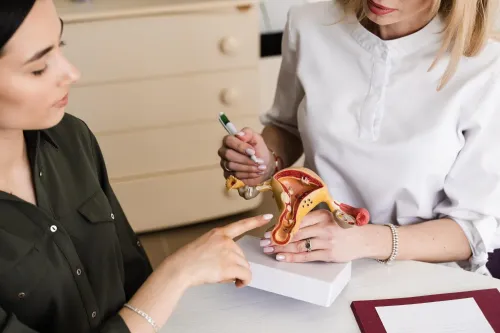
Both partners should attend the first IVF specialist consultation. The clinician will take a reproductive and menstrual-cycle history, ask about pregnancies and miscarriages, sexual function, pelvic or testicular surgery, medications, supplements, and family fertility conditions. Expect a physical examination when indicated and a review of earlier scans, blood tests, semen analyses, and treatment records.
What to bring to fertility appointment:
- Dates of your last six menstrual periods, including cycle length and unusual bleeding
- Pregnancy records, including outcomes, miscarriage details, and ectopic-pregnancy treatment
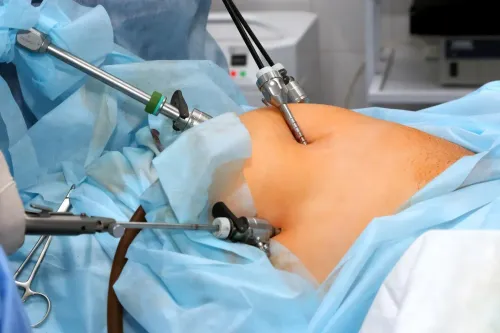
- Operative reports from laparoscopy, cesarean birth, fibroid removal, tubal surgery, or testicular procedures
- Every semen-analysis report, even if the male partner has fathered a child before
- A current list of prescription medicines, over-the-counter drugs, vitamins, and supplements
- Details of prior fertility treatment, including drugs, doses, inseminations, IVF cycles, embryos transferred, and outcomes
The appointment usually ends with a plan for both partners’ fertility evaluation. That may include semen analysis, ovulation assessment, and tests of the uterus or fallopian tubes when indicated; an abnormal semen result often needs repeating because measurements vary between samples.
Cycles that reliably arrive about every 21–35 days suggest ovulation, but they do not rule out blocked tubes, endometriosis, sperm problems, or other causes. Irregular or absent periods need evaluation for an ovulation disorder rather than an automatic decision to proceed to IVF.
Which fertility tests clarify the problem, and what can they not prove?
A fertility evaluation identifies where conception may be failing; no single test proves whether IVF will work. Regular cycles every 21–35 days usually indicate ovulation, while irregular or absent periods need assessment for ovulatory disorders. A mid-luteal progesterone test can confirm recent ovulation, but it does not assess egg quality, tubes, or sperm.
| Test | What it clarifies | What it cannot prove |
|---|---|---|
| AMH ovarian reserve test | Expected ovarian response to stimulation | Natural conception, egg quality, or IVF success |
| Antral follicle count | Follicles visible on transvaginal ultrasound and likely stimulation response | Egg quality or pregnancy probability |
| Basal FSH | Ovarian response signal, usually measured early in the cycle | Natural fertility on its own |
Pelvic ultrasound evaluates ovarian anatomy, fibroids, adenomyosis, and some uterine abnormalities. A hysterosalpingography tubal blockage test shows whether the fallopian tubes are open and outlines the uterine cavity; saline sonography or hysteroscopy may investigate suspected cavity lesions. A normal ovarian-reserve result cannot compensate for a blocked tube or untreated male-factor infertility.
- Concentration: sperm count per millilitre
- Motility: forward movement that supports reaching the egg
- Morphology: sperm shape and structure
- Ejaculate volume: low volume may suggest collection, obstruction, or gland-related problems
Repeat an abnormal semen analysis after about three months, or sooner for azoospermia or severe oligospermia. One abnormal report does not automatically require IVF or ICSI; repeat results and the pattern determine whether to seek reproductive-urology assessment, treat a cause, consider insemination, or discuss assisted reproduction.
Broad immunologic panels and routine postcoital testing are not standard initial tests without a specific indication.
When do test results support IVF, another treatment, or a different specialist?
Test results do not automatically send you to IVF. When IVF is recommended depends on the cause, time available, and whether simpler treatment has a reasonable chance of working.
- Correct a reversible problem first: treat thyroid disease or high prolactin, and use intercourse timing when ovulation and both tubes are normal.
- Use ovulation induction versus IVF when ovulation is irregular or absent. Tablets such as letrozole may restore ovulation; injectable gonadotropins require closer monitoring.
- Consider IUI versus IVF when tubes are open and sperm numbers are adequate. IUI places prepared sperm inside the uterus, while IVF fertilises eggs in the laboratory.
- Move sooner to IVF for blocked tubes, severe endometriosis, diminished ovarian reserve with limited time, severe male-factor infertility, or failed less-invasive treatment.
| Option | Main use | Key limitation |
|---|---|---|
| Timed intercourse | Ovulation with no major abnormality | Does not bypass tubal or sperm problems |
| Ovulation induction | Irregular or absent ovulation | Requires monitoring and does not repair blocked tubes |
| IUI | Mild sperm or unexplained infertility | Less useful with blocked tubes or severe sperm impairment |
| IVF | Tubal, endometriosis, ovarian-reserve, or persistent infertility | Involves stimulation, egg retrieval, and embryo transfer |
| ICSI male infertility treatment | Very low sperm count, motility, or sperm retrieved surgically | Does not replace treatment of the underlying male condition |
A reproductive urologist should assess palpable varicocele, azoospermia, severe oligospermia, hormonal abnormalities, erectile or ejaculatory problems, or prior testicular injury. Before IVF, ask about the likely number of attempts, embryo-transfer strategy, and elective single-embryo transfer. Dr Suparna Ganguly helps Bengaluru patients review findings and choose treatment or referral.
Seek prompt review for severe pelvic pain, heavy bleeding, fever, or a positive pregnancy test with pain or bleeding; these can signal ovarian hyperstimulation syndrome or ectopic pregnancy.
Related service
Infertility Treatment ₹700 Dr. Suparna Ganguly offers comprehensive infertility evaluation and treatment for couples seeking expert guidance on their journey to parenthood. View service → |
Frequently asked questions
How long should you try before booking a fertility evaluation?
Book an evaluation after 12 months of regular, unprotected intercourse when the woman is younger than 35. At ages 35 to 39, book after 6 months. At age 40 or older, seek evaluation promptly rather than waiting.
Which symptoms and medical histories mean you should seek help immediately?
Seek care without waiting when periods are absent or highly irregular, pelvic pain suggests endometriosis, there is a history of pelvic infection or tubal disease, prior chemotherapy or radiation, recurrent miscarriage, or known sperm problems.
What should both partners expect and bring to the first consultation?
Both partners should expect a review of their medical, surgical, menstrual, sexual, and pregnancy history. Bring medication lists, previous fertility reports, menstrual dates, imaging records, semen analysis results, and details of prior treatments.
Which fertility tests clarify the problem, and what can they not prove?
Evaluation may include semen analysis, ovulation assessment, ovarian reserve tests such as AMH, pelvic ultrasound, and tubal assessment. These tests identify factors affecting fertility but cannot guarantee pregnancy or measure egg quality perfectly.
When do test results support IVF, another treatment, or a different specialist?
Results may support timed intercourse, ovulation medication, intrauterine insemination, IVF, or referral to another specialist. The choice depends on age, diagnosis, duration of infertility, ovarian reserve, sperm findings, tubal status, and previous treatment.